An acai supplier with USDA Organic certification can show you three things on paper: a current organic certificate, a label that uses an approved organic claim, and product specs that match what arrives on the pallet. Tropical Acai LLC lists USDA Organic, IBD Organic and EU Organic, Non-GMO Project Verified, Kosher (BDK) and FSSC 22000 on its organic acai wholesale page. Therefore, this guide shows how to check those claims, what the USDA’s own rules say, and which case specs to compare before you order. Updated November 2026.
Key Takeaways
- In short, ask every supplier for the organic certificate and check that the product you are buying is on it.
- For example, USDA labeling rules give four label categories, and only products with at least 95 percent organic ingredients may be labeled “organic”.
- Tropical Acai LLC lists USDA Organic, IBD Organic, EU Organic, Non-GMO Project Verified, Kosher (BDK) and FSSC 22000 for its organic acai.
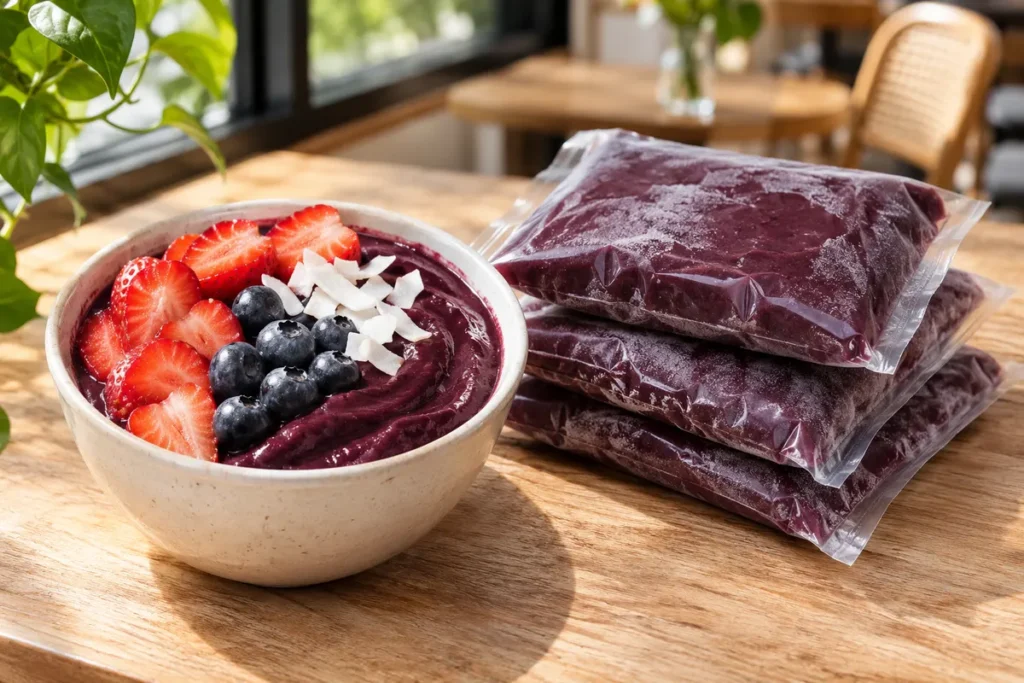
- Finally, compare case specs, not only prices: packs ship 60 per case, cubes 17.6 lb per case and the scoopable pail 22 lb net.
Table of contents
- Acai Supplier with USDA Organic Certification: What You Can Check
- How to Verify a USDA Organic Acai Supplier
- The Four USDA Organic Label Categories
- Certifications Tropical Acai LLC Lists for Its Organic Acai
- From Pará to Your Freezer: What the Supply Chain Looks Like
- Case Specs to Compare Before You Order
- Questions to Ask Any Acai Supplier Before You Sign
- Acai Supplier with USDA Organic Certification: FAQ
- Keep Reading
Acai Supplier with USDA Organic Certification: What You Can Check
First, the USDA says that organic certification allows a farm or processing facility to sell, label and represent its products as organic. Specifically, it covers the whole chain, from the grower to the plant that processes and packs the fruit. As a result, the claim “organic” on a case of acai is something you can verify, not only read.
Moreover, the USDA enforces the rules. An operation that breaks them faces actions that can include fines or the suspension or revocation of its organic certificate, according to the USDA Agricultural Marketing Service. In practice, a supplier you can trust hands you the paper without a long wait.
This page covers one question: how a buyer confirms an acai supplier with USDA Organic certification. For the wider list of seals, read what certification to look for in acai and pitaya products and the acai certification guide for entrepreneurs.
How to Verify a USDA Organic Acai Supplier
Because the checks take minutes, run all five on any USDA organic acai supplier before your first order. Also, repeat them once a year, since certificates are renewed.
Time needed: 20 minutes
Verify a USDA Organic acai supplier in five steps: certificate, product scope, label category, certifier and file copy.
- Ask for the current organic certificate
First, request the certificate of the operation that processes and packs the acai, and check that it is current.
- Check that your product is in scope
Next, read the certificate for the products it covers, so the case you plan to buy is listed and not just the supplier.
- Read the label claim
Then compare the label with the four USDA categories: 100 percent organic, organic, made with organic ingredients, or specific organic ingredients only.
- Look up the certifier
After that, confirm that a USDA-accredited certifying agent issued the certificate, and search the certified operation in the USDA Organic Integrity Database.
- Keep a copy on file
Finally, store the certificate with your supplier records and set a reminder for its renewal date.
Notably, the USDA requires that organic product labels are reviewed and approved by a USDA-accredited certifying agent before they reach the market. The USDA Organic Integrity Database is the public place to look up certified operations.
The Four USDA Organic Label Categories
Next, the label tells you how much of the product is organic. The table summarizes the USDA organic label categories on the USDA organic labeling page.
| Label wording | Organic content | USDA seal allowed? |
|---|---|---|
| 100 percent organic | 100 percent organic ingredients (salt and water excluded) | Yes |
| Organic | At least 95 percent organic ingredients (salt and water excluded) | Yes |
| Made with organic (up to three ingredients) | At least 70 percent organic ingredients | No |
| Specific organic ingredients only | Less than 70 percent; organic items marked in the ingredient list | No |
For example, a puree labeled “organic” must hold at least 95 percent organic ingredients, while a “made with organic” mix may not carry the seal at all. Therefore, read the exact wording on the pack before you print “organic” on your own menu.
Certifications Tropical Acai LLC Lists for Its Organic Acai
According to the organic acai wholesale page, the organic acai certifications of Tropical Acai LLC are the seals below. Meanwhile, each product page repeats the USDA Organic, Non-GMO Project Verified, Kosher (BDK) and FSSC 22000 line.
| Certification | What it covers |
|---|---|
| USDA Organic | How the fruit was grown and handled under the USDA organic regulations |
| IBD Organic and EU Organic | Organic standards for the European market |
| Non-GMO Project Verified | Third-party verification that the product is non-GMO |
| Kosher (BDK) | Kosher certification |
| FSSC 22000 | An audited food safety system at the processing plant |
In addition, the supplier states that its acai carries no food coloring and no added flavors, and that the fruit is harvested and processed on the same day. Because the plant, not the label alone, has to pass the audit, ask for the plant certificate along with the product certificate.
From Pará to Your Freezer: What the Supply Chain Looks Like
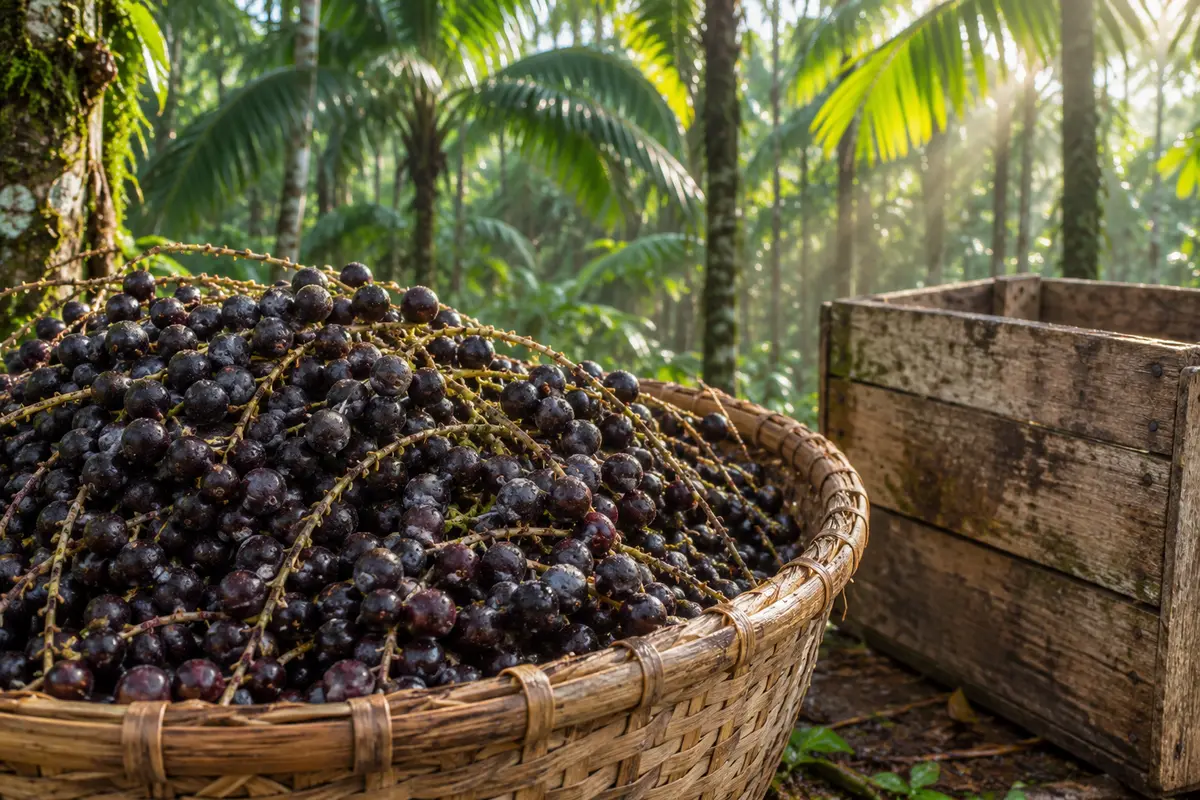
Tropical Acai LLC produces its organic acai in the state of Pará, along the Amazon River, and manages the supply chain from the processing plant in Brazil to the customer in the USA. Specifically, the steps are seed separation, gentle pasteurization, homogenization and instant quick freezing. As a result, the texture and flavor stay the same all year.
Moreover, the company keeps US inventory and distributes nationwide. Products are also available through Dot Foods and WebstaurantStore, so a small shop can order a few cases through a distributor it already uses. Delivery covers the US, Canada and Europe.
Case Specs to Compare Before You Order
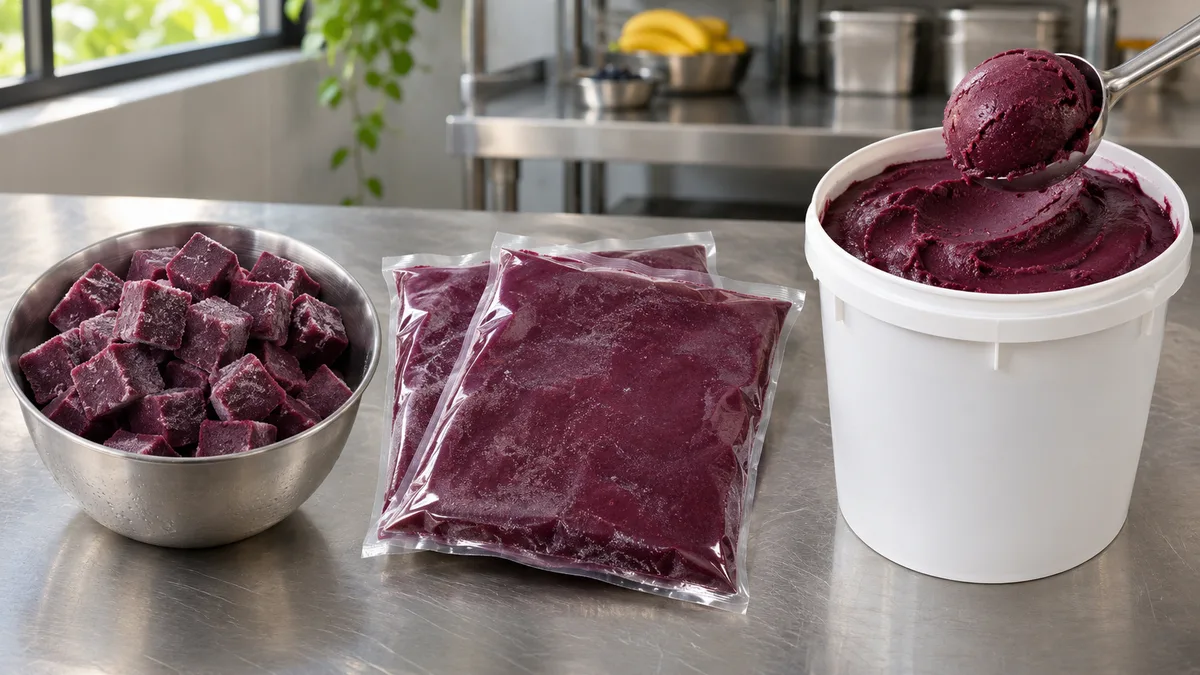
However, a certificate says nothing about format, so compare the specs next. The table uses the figures printed on the product pages. For a deeper side-by-side, read the comparison of acai packs, blender cubes and sorbet.
| Product | Case or pail | Sugar |
|---|---|---|
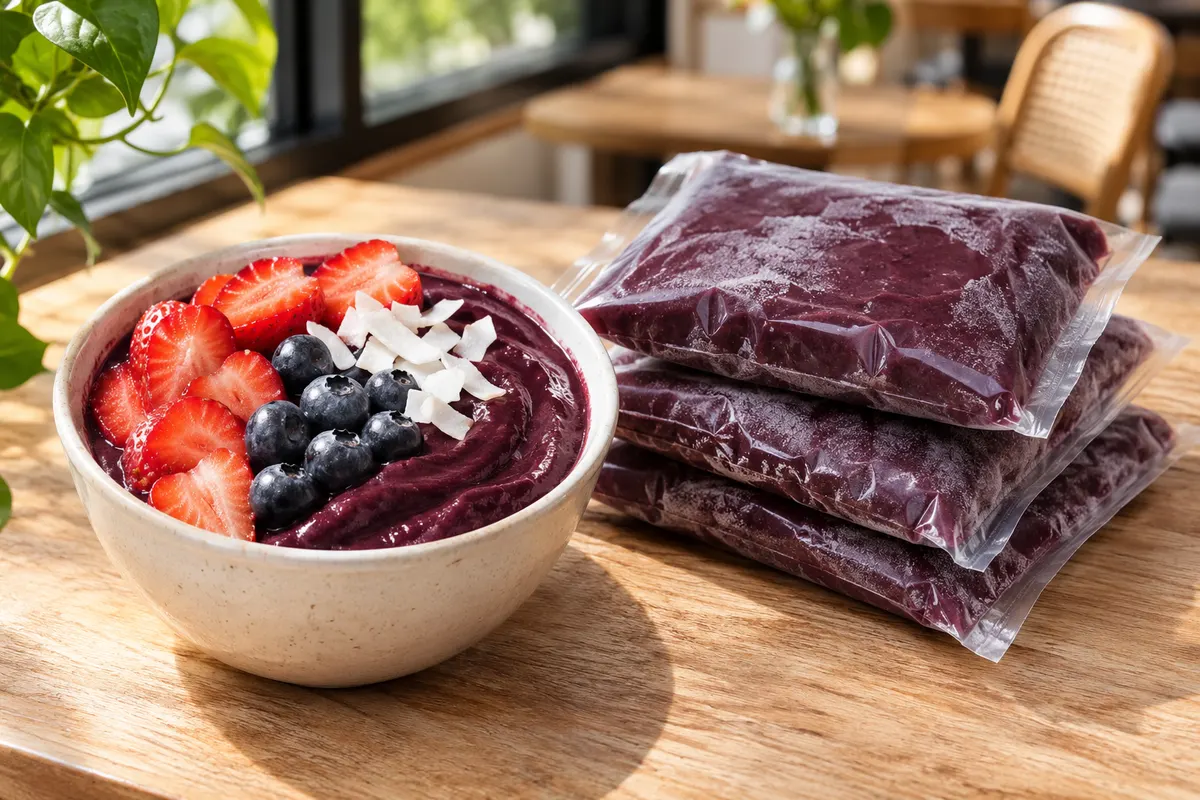
| Organic Pure Acai Packs | 60 packs of 100 g (14.7 lb case) | No added sugar, 80 calories per pack |
| Authentic Mix Organic Acai Packs | 60 packs of 100 g (14.7 lb case) | 9 g organic cane sugar, 110 calories per pack |
| Organic Pure Acai Cubes | 2 bags of 8.81 lb (17.6 lb) | Zero sugar |
| Authentic Mix Organic Acai Cubes | 2 bags of 8.81 lb (17.6 lb) | Lightly sweetened with organic cane sugar |
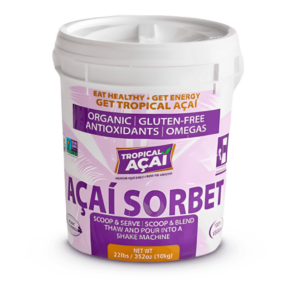
| Organic Acai Pulp Base | 2.64 gal pail, 22 lb net | Sweetened, more than 80 percent acai pulp |
| Acai Bowl in a Box | 12 boxes of 1 liter per case | Sweetened with cane sugar |
Notably, the unsweetened acai puree for customizable recipes suits menus that add their own sweetener, while the Authentic Mix suits classic Brazilian-style bowls.
Questions to Ask Any Acai Supplier Before You Sign
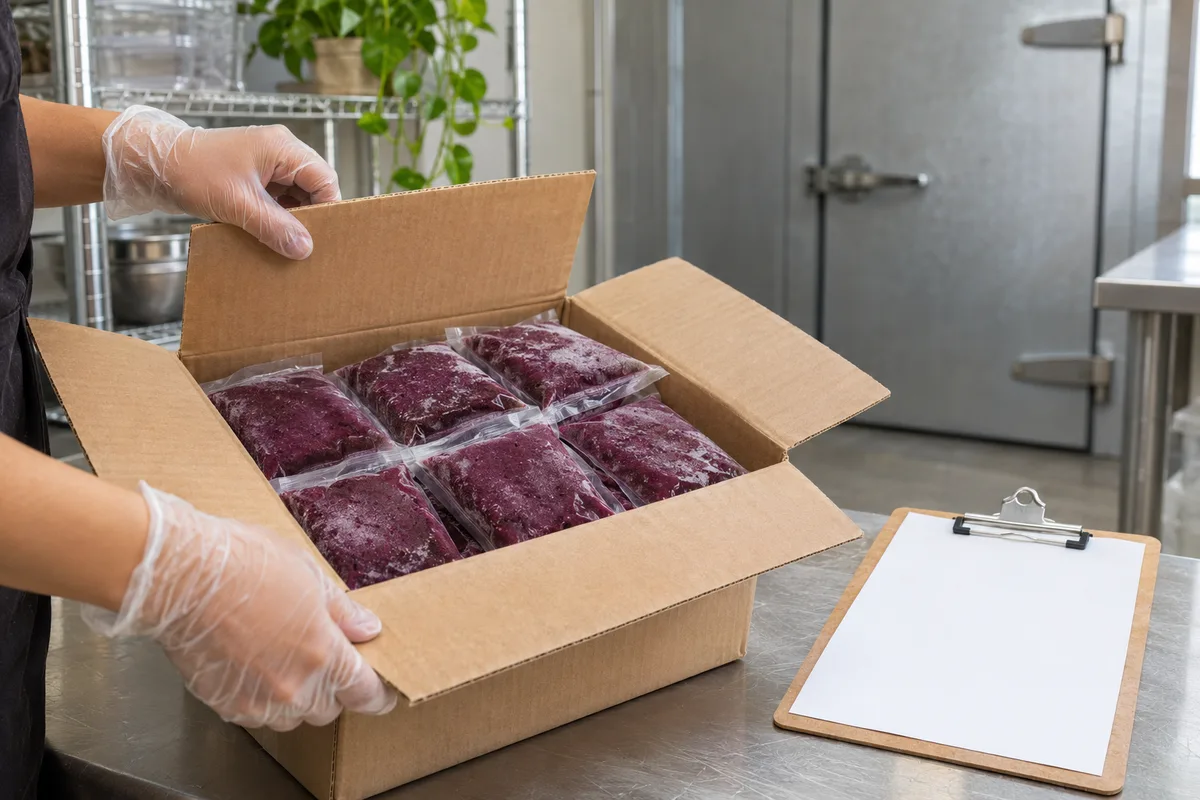
Because certification is only one part of a good supplier, use these questions to ask an acai supplier next to the five checks above.
- First, who processes the acai, and can you see that plant’s organic and food safety certificates?
- Next, is the exact product you plan to order listed on the certificate?
- Then, what do the case weight and pack count say, and do they match what arrives?
- Also, how is the product shipped and held frozen from the plant to your door, and which distributors deliver near you?
- Meanwhile, how long has the supplier worked with the growers, and can it explain each processing step?
- Finally, who answers when a delivery looks wrong, and how fast?
When your answers are on file, request wholesale pricing from the organic acai wholesale page or call toll free at 1-855-550-2224. You can also read why businesses choose Tropical Acai for the company background.
Acai Supplier with USDA Organic Certification: FAQ
It means a USDA-accredited certifying agent oversees the operation, which must follow the USDA organic regulations: no genetic engineering, no ionizing radiation, no sewage sludge, and only allowed substances.
Ask for the current organic certificate, check that your product is in its scope and look up the operation in the USDA Organic Integrity Database.
At least 95 percent of the ingredients, excluding salt and water. A product that says “100 percent organic” must contain only organic ingredients.
USDA Organic, IBD Organic and EU Organic, Non-GMO Project Verified, Kosher (BDK) and FSSC 22000.
Yes. The Organic Pure Acai Packs and Organic Pure Acai Cubes list zero added sugar, while the Authentic Mix packs use 9 g of organic cane sugar per 100 g pack.
Both the Organic Pure Acai Packs and the Authentic Mix Organic Acai Packs ship 60 packs of 100 g per case, and the case weighs 14.7 lb.
Request wholesale pricing on the organic acai wholesale page or call toll free at 1-855-550-2224. The products are also available through Dot Foods and WebstaurantStore.
Keep Reading
In short, certification checks take less than an hour and protect every order after the first. Next, these guides cover the buying side.