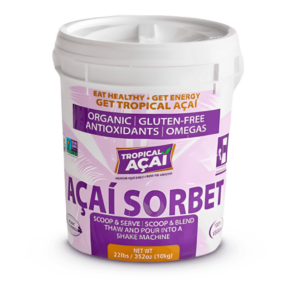
Acai health benefits is a popular search, but a food label has no line for benefits. Instead, it lists measured amounts. Therefore, this guide sticks to numbers: what the Tropical Acai LLC labels print per 100 g, how that compares with four common bowl fruits in USDA data, and how to scale a label to your own serving. Updated November 2026.
Key Takeaways
- Because a nutrition label lists calories, fat, carbohydrates, fiber, sugars, sodium and some minerals, it does not list benefits.
- Per 100 g, Organic Pure Acai has 80 calories, 7 g of fat, 3 g of fiber and 0 g of added sugar (Tropical Acai label).
- In addition, raspberries have 6.5 g of fiber per 100 g (USDA), about twice the 3 g printed on the acai labels.
- Because label values scale with weight, two 100 g packs give exactly twice the numbers.
Table of contents
- Acai Health Benefits: What a Nutrition Label Can and Cannot Tell You
- Acai Health Benefits on the Label: Reading It Line by Line
- Acai Health Benefits Compared With Common Bowl Fruits
- Serving Math: From One Pack to Your Bowl
- How to Read an Acai Nutrition Label in Four Steps
- Acai Health Benefits and Nutrition Facts FAQ
- Keep Reading
Acai Health Benefits: What a Nutrition Label Can and Cannot Tell You
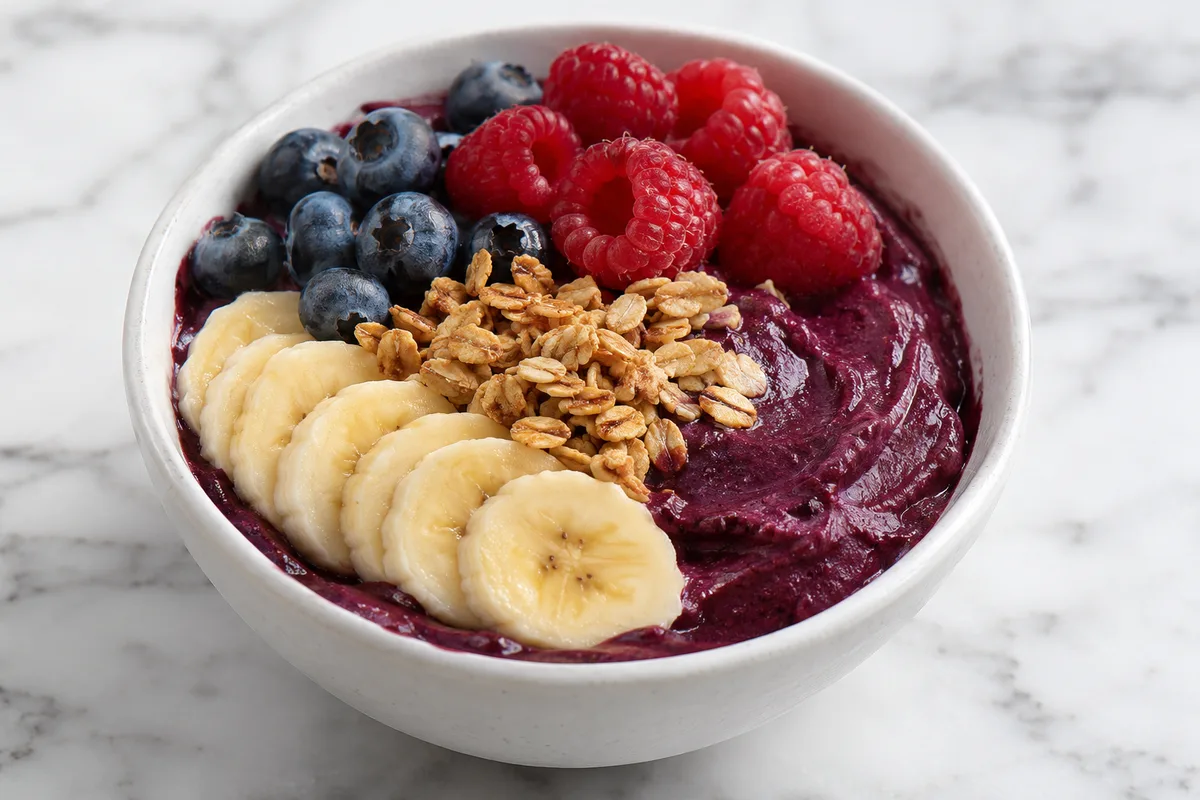
Simply put, a nutrition panel is a list of measured amounts per serving. Specifically, it shows calories, fat, saturated fat, sodium, carbohydrates, fiber, sugars, protein and a few minerals. For example, the acai nutrition facts on a Tropical Acai pack are all amounts you can weigh and check.
However, a panel cannot show what a food does inside the body. For that reason, this guide makes no claims about disease, weight, energy or any other body effect. Instead, it gives you numbers to check and compare, because numbers are what a label can prove. Also, for a medical question about food, ask a doctor or a registered dietitian.
The same applies to antioxidants. Because the Tropical Acai labels print no antioxidant value, none appears here. In short, acai health benefits are a question for a doctor, and nutrition facts are a question for the label.
Acai Health Benefits on the Label: Reading It Line by Line
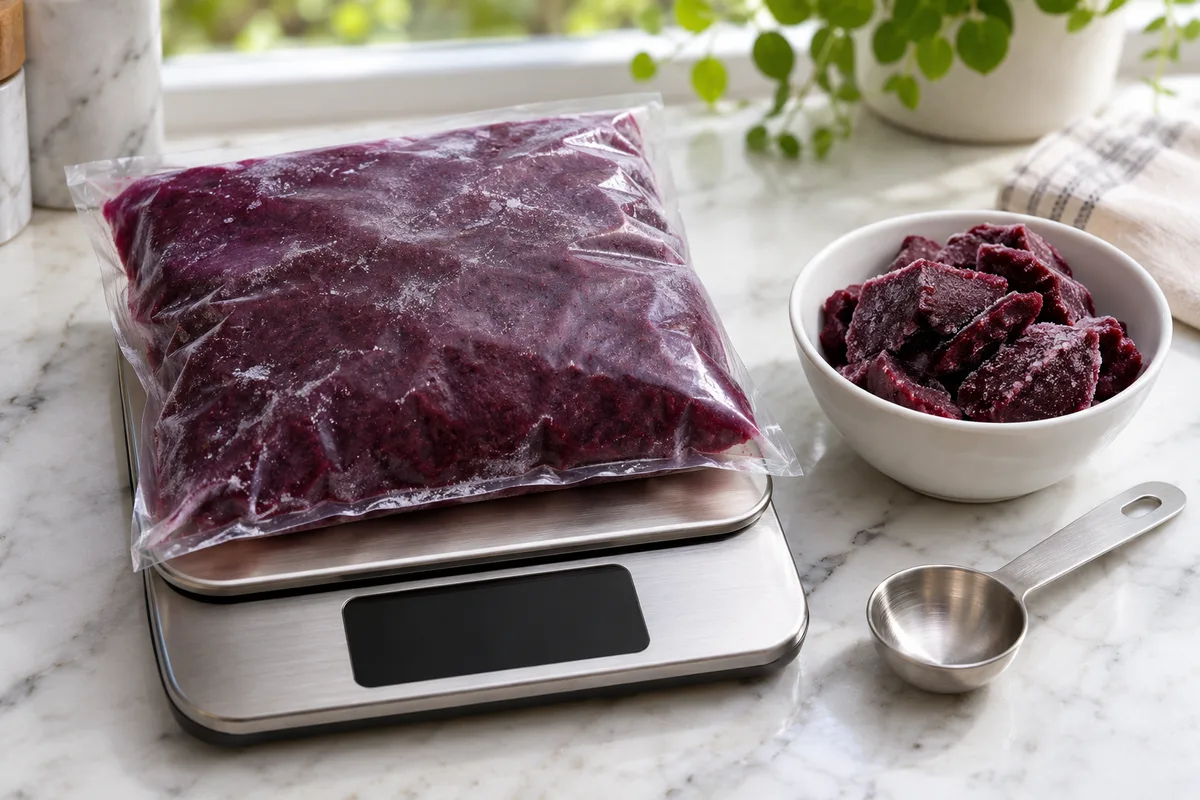
First, check the serving size. The Tropical Acai blender packs list one 100 g pack, so every number below is per 100 g. Next, look at the lines that differ most between the three frozen bases. As a result, you can see how much one base can differ from another.
| Label line (per 100 g) | Organic Pure Acai | Authentic Mix | Acai Pulp Base |
|---|---|---|---|
| Fat (saturated) | 7 g (2 g) | 7 g (2 g) | 4 g (0 g) |
| Sodium | 35 mg | 25 mg | 10 mg |
| Calcium | 430 mg | 130 mg | 40 mg |
| Iron | 3.9 mg | 2 mg | not listed |
| Added sugar | 0 g | 9 g | 14 g |
As a result, the pure base and the sweetened bases read very differently on the added sugar line, even though acai fiber is 3 g in all three. The ingredient list explains why. The Pure base is organic acai and citric acid, whereas the Authentic Mix also adds organic cane sugar. For the full calorie and carbohydrate comparison, see our acai superfood guide.
Acai Health Benefits Compared With Common Bowl Fruits
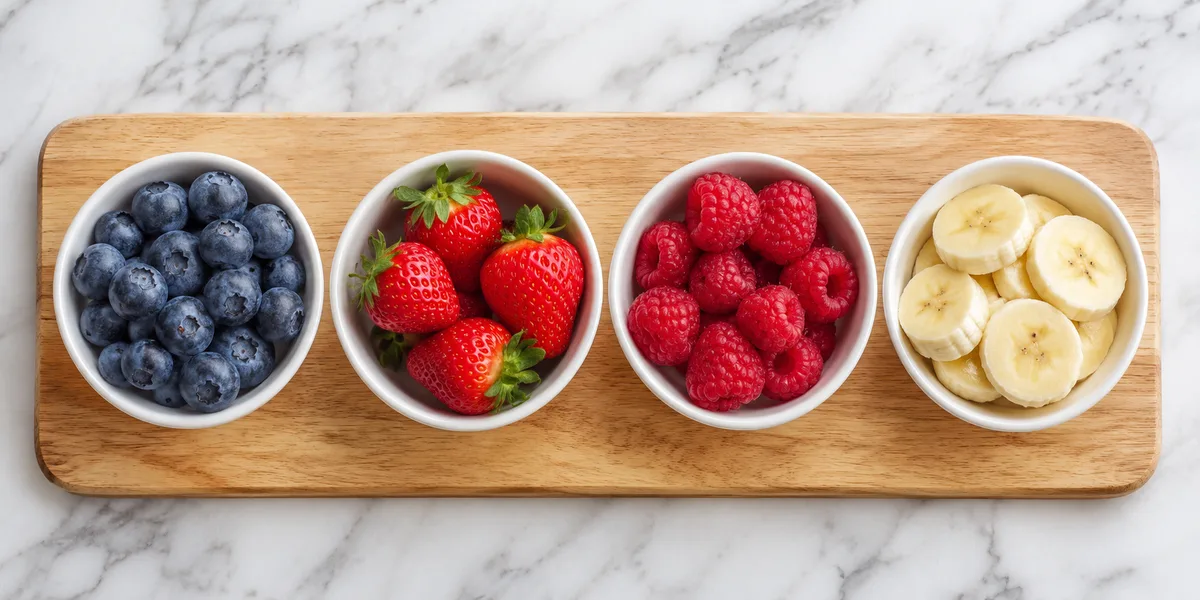
First, per 100 g, Organic Pure Acai has more fat and less sugar than the berries and banana most bowls are topped with. For that reason, the table below puts the acai label next to raw fruit values from USDA FoodData Central.
| Per 100 g | Calories | Fat | Carbs | Fiber | Sugars |
|---|---|---|---|---|---|
| Organic Pure Acai (label) | 80 | 7 g | 3 g | 3 g | 0 g |
| Blueberries, raw | 57 | 0.33 g | 14.5 g | 2.4 g | 9.96 g |
| Strawberries, raw | 32 | 0.3 g | 7.68 g | 2 g | 4.89 g |
| Raspberries, raw | 52 | 0.65 g | 11.9 g | 6.5 g | 4.42 g |
| Bananas, raw | 89 | 0.33 g | 22.8 g | 2.6 g | 12.2 g |
Overall, three differences stand out. First, acai carries 7 g of fat, while each fruit has under 1 g. Second, its 3 g of carbohydrate is far below the 7.68 to 22.8 g in the fruits. Third, raspberries lead on fiber with 6.5 g, so fruit toppings add fiber to a bowl.
Still, treat the comparison with care. The acai values describe frozen pulp as packed, but the USDA values describe raw whole fruit. In other words, the table compares a label with database entries and does not rank the foods.
Serving Math: From One Pack to Your Bowl
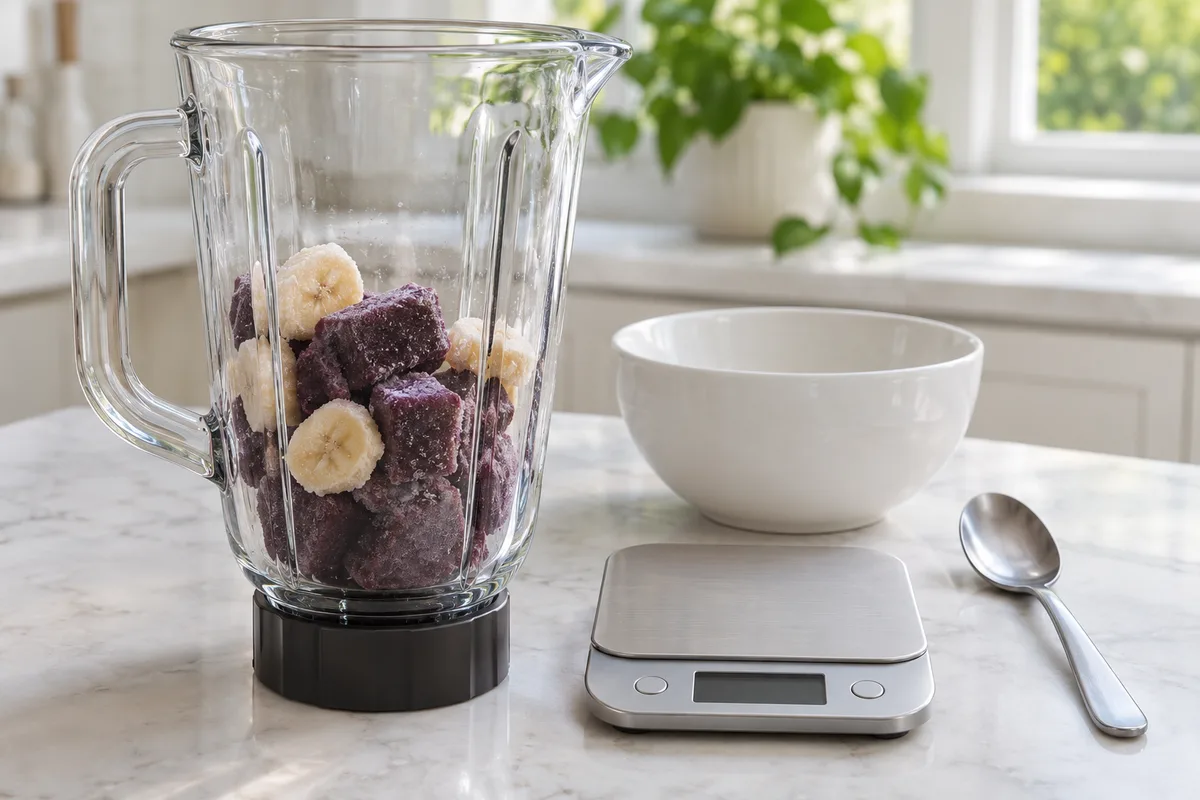
First, label values are per 100 g. Therefore, they scale in a straight line. Because one pack is 100 g, you can simply multiply by the number of packs in the blender. Also, a case holds 60 packs.
| Base and amount | Calories | Fat | Fiber | Added sugar |
|---|---|---|---|---|
| Organic Pure Acai, 1 pack (100 g) | 80 | 7 g | 3 g | 0 g |
| Organic Pure Acai, 2 packs (200 g) | 160 | 14 g | 6 g | 0 g |
| Authentic Mix, 1 pack (100 g) | 110 | 7 g | 3 g | 9 g |
| Authentic Mix, 2 packs (200 g) | 220 | 14 g | 6 g | 18 g |
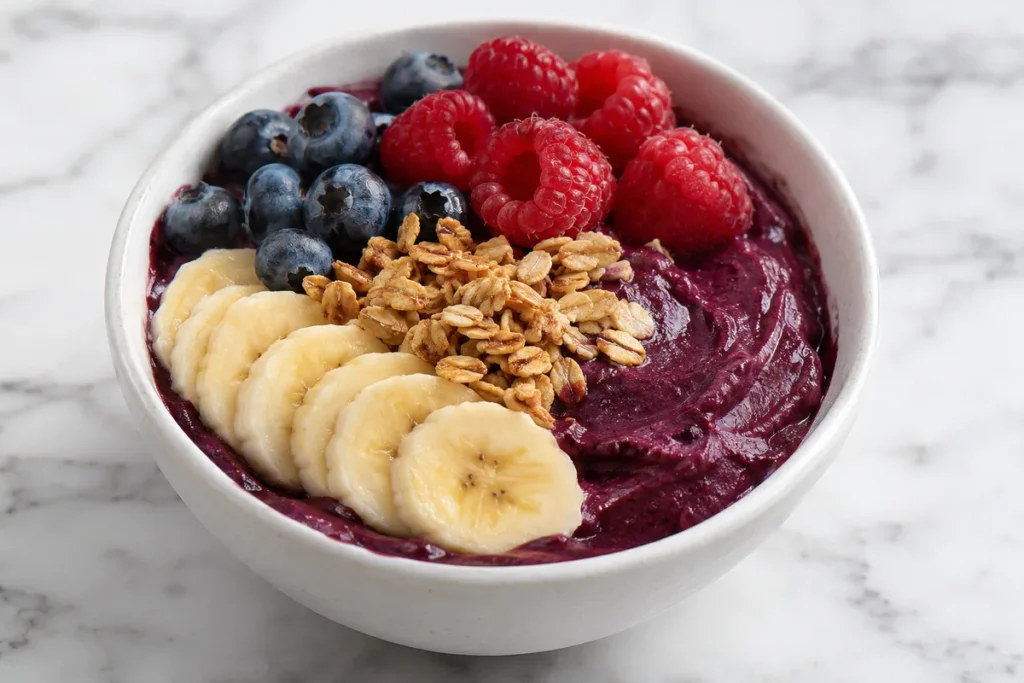
Of course, the base is only one layer of a bowl. Blended fruit and toppings add their own numbers, so we add them up ingredient by ingredient in Acai Bowls. For base weights per bowl size, read Acai Bowl Portion Size.
How to Read an Acai Nutrition Label in Four Steps
These four steps work for any frozen acai product. Moreover, they take about a minute, so you can use them before every order.
Time needed: 1 minute
Read an acai nutrition label in four steps, from serving size to total for your bowl.
- Find the serving size
First, find the serving size at the top of the panel. Tropical Acai blender products list 100 g, so compare them only at the same weight.
- Read the ingredient list
Next, read the ingredients. A pure base lists acai and citric acid, while a sweetened base also lists cane sugar.
- Compare the added sugar line
Then compare the added sugar line. It shows 0 g, 9 g or 14 g per 100 g across the three bases above.
- Multiply by your amount
Finally, multiply every line by the number of 100 g servings in your recipe, then add the toppings.
Acai Health Benefits and Nutrition Facts FAQ
Organic Pure Acai has 80 calories per 100 g. However, the Authentic Mix and the Acai Pulp Base each have 110, according to their labels.
It depends on the product. For example, Organic Pure Acai lists 0 g of added sugar. However, the Authentic Mix lists 9 g and the Acai Pulp Base lists 14 g per 100 g.
In fact, all three Tropical Acai frozen bases list 3 g of fiber per 100 g. By comparison, USDA lists 6.5 g per 100 g for raw raspberries.
Both Organic Pure Acai and the Authentic Mix list 7 g of fat per 100 g, including 2 g of saturated fat. In contrast, the Acai Pulp Base lists 4 g with no saturated fat.
In addition, each Tropical Acai product page lists its serving size, ingredients and nutrition values. Therefore, start with the Organic Pure Acai page, then compare the others at the same weight.
Keep Reading
In short, the label gives you facts to compare, and your own serving gives you the totals. Next, continue with these guides for the fruit, its forms and its sugar content.