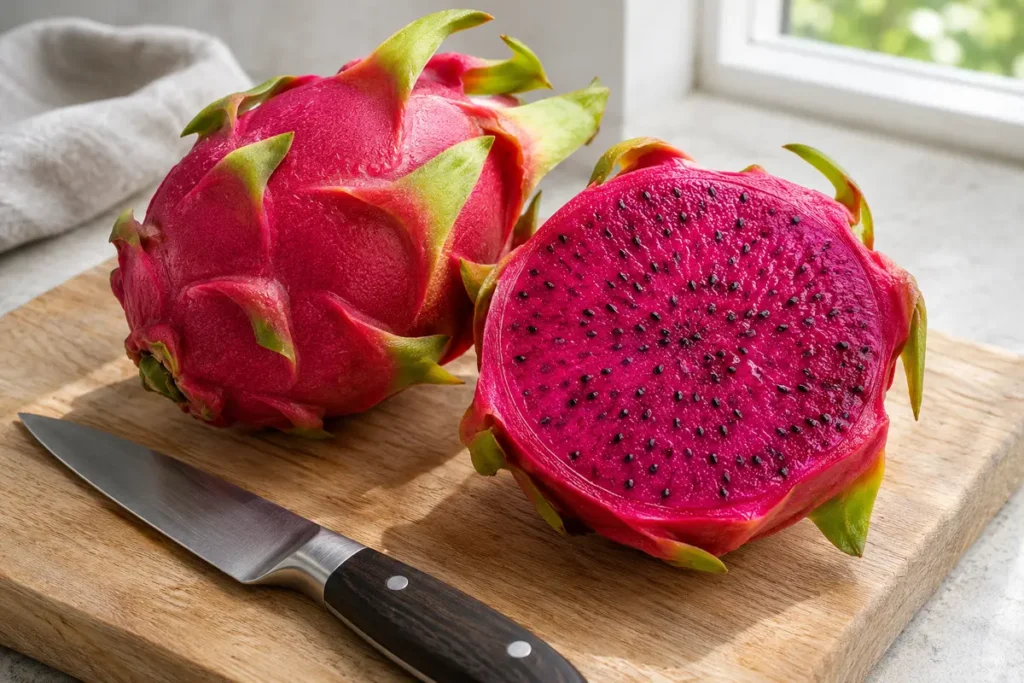
Pitaya fruit reaches a menu in two forms, whole fresh fruit and frozen pulp, and consequently the numbers for the two differ. Per 100 g, USDA lists 68 calories for dragon fruit, whereas the Premium Pitaya Pack label lists 40 calories and 3 g of fiber. Therefore, this guide sets both side by side, gram by gram, and it makes no claims about effects on the body. Updated November 2026.
Key Takeaways
- In short, pitaya fruit is also called dragon fruit or pitahaya, and it grows on several cactus species with white, red or yellow-skinned fruit.
- For example, per 100 g, USDA lists 68 calories and 1.8 g of fiber for fresh dragon fruit, whereas the Premium Pitaya Pack label lists 40 calories and 3 g.
- In addition, the two sources do not match line by line, so use the USDA line for fresh fruit and the label for the pack, and never mix them in one total.
- Finally, a 150 g pack plus 100 g of banana totals about 149 calories.
Table of contents
Pitaya Fruit Types: Skin and Flesh Colors
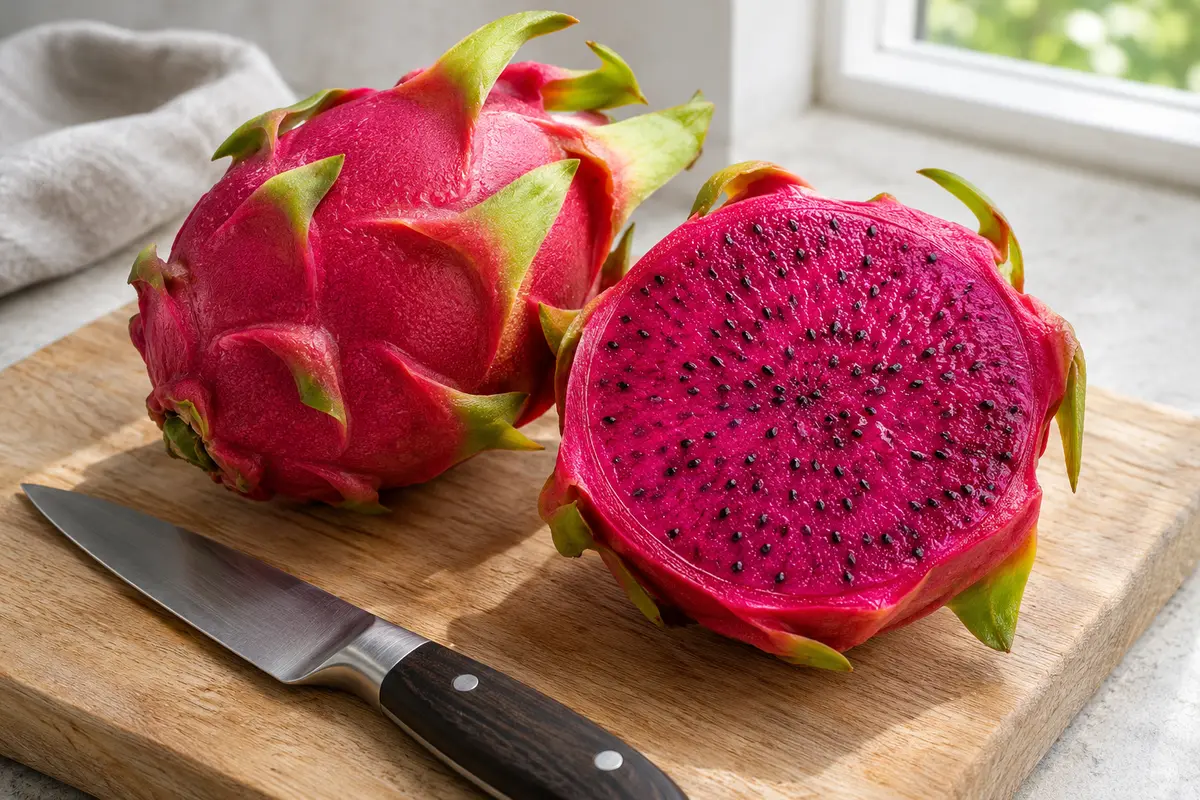
First, the name covers more than one plant. According to the dragon fruit reference entry, pitaya fruit grows on cacti of the genus Selenicereus, and it is native to southern Mexico and the Pacific coast of Central America. For instance, Vietnam, China, Mexico and Colombia are among the large growing regions today. As a result, a single fruit weighs roughly 150 to 600 g, so no two fruits give the same portion.
| Pitaya fruit type | Skin | Flesh |
|---|---|---|
| Selenicereus undatus | Pink | White |
| Selenicereus costaricensis | Red | Red |
| Selenicereus megalanthus | Yellow | White |
Notably, the red flesh owes its color to betacyanins, the pigment family that also colors beets. Meanwhile, the Tropical Acai packs use red pitaya from Brazil, and that is why the bowls in this guide are magenta. Also, for the difference between the two names, see pitaya versus dragon fruit.
Pitaya Fruit Nutrition: USDA Fresh Fruit vs the Pack Label
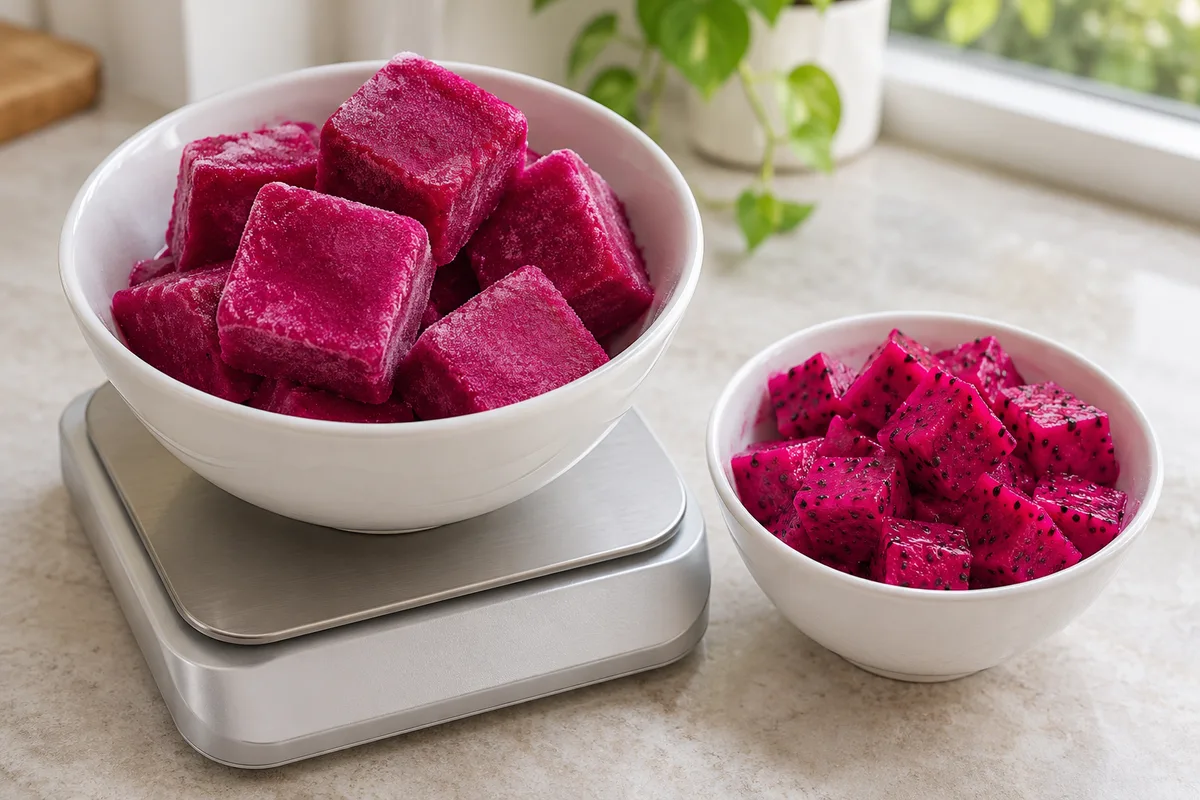
Next, the numbers. Specifically, the table lists fresh dragon fruit from USDA FoodData Central beside the printed label of the Premium Pitaya Pack, both per 100 g.
| Per 100 g | Fresh dragon fruit (USDA) | Premium Pitaya Pack (label) |
|---|---|---|
| Calories | 68 | 40 |
| Total fat | 0.21 g | 0.5 g |
| Total carbohydrate | 16.2 g | 7 g |
| Dietary fiber | 1.8 g | 3 g |
| Total sugars | 12 g | 6 g |
| Protein | 0.68 g | 1 g |
| Calcium | 13 mg | 80 mg |
| Vitamin C | 19.8 mg | 50 mg |
However, the columns do not agree, and they should not be forced to. USDA describes fresh fruit as it is eaten, whereas the label describes one frozen pulp product made from pitaya pulp with seeds. Consequently, a cafe that switches from fresh fruit to packs should recalculate its numbers from the label. In addition, the label lists 753 mg of potassium and 1.5 mg of iron per 100 g, and the USDA line used here does not.
Likewise, a bowl base is rarely 100 g. At 150 g, for example, the pack lists 60 calories, 10.5 g of carbohydrate and 4.5 g of fiber, whereas 150 g of fresh dragon fruit lists 102 calories, 24.3 g of carbohydrate and 2.70 g of fiber.
How to Cut Pitaya Fruit in Four Steps
Time needed: 5 minutes
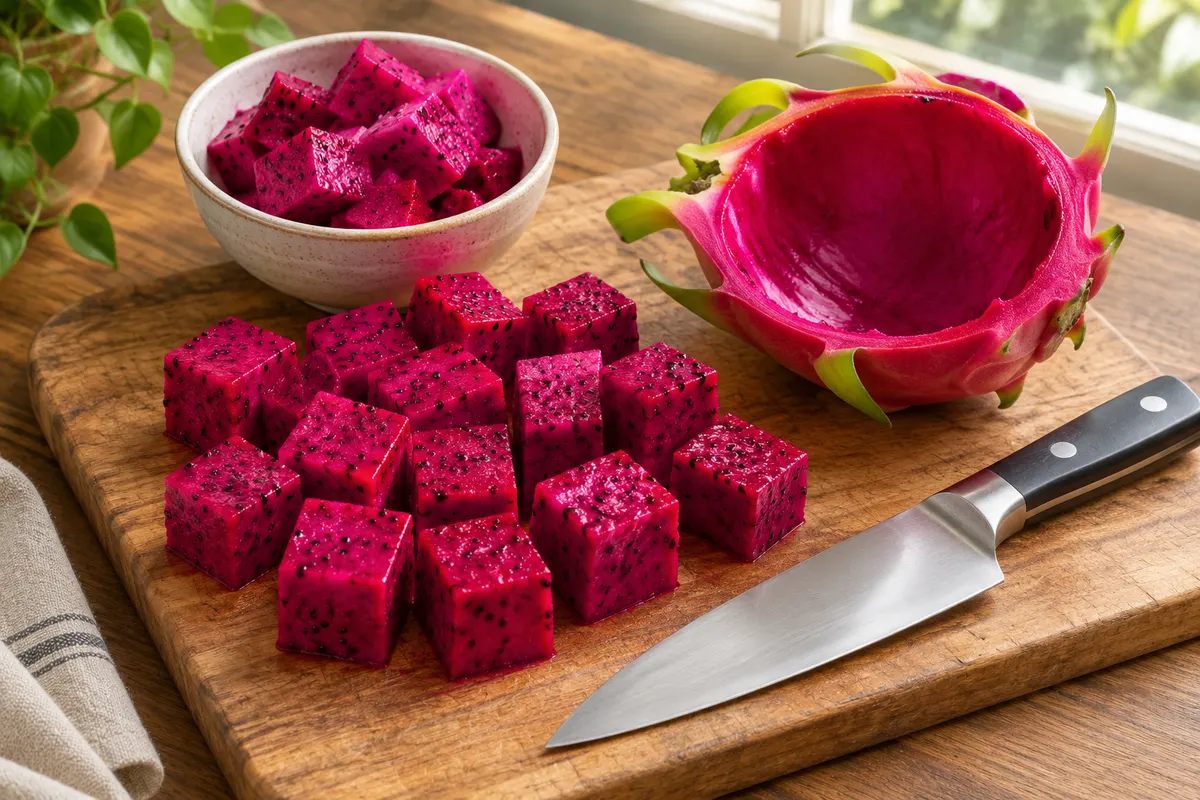
Therefore, cut a fresh pitaya fruit into even cubes in four steps, with a knife, a spoon and a board.
- Wash and dry the fruit
First, rinse the skin under cool water and dry it, so the knife does not slip.
- Halve it lengthwise
Next, cut the fruit from top to bottom, so both halves show the flesh and its small black seeds.
- Scoop out the flesh
Then run a large spoon between the skin and the flesh, and lift each half out whole.
- Cube and weigh
Finally, cut the flesh into even cubes on a board and weigh the portion in grams.
Because the seeds sit inside the flesh, they are eaten with it. Likewise, the pack label lists its single ingredient as pitaya pulp with seeds. Also, for taste notes, see what pitaya tastes like, and for serving ideas, see how to eat pitaya.
Fresh vs Frozen Pitaya for a Cafe Menu
Meanwhile, a menu has to repeat the same bowl all day. Therefore, the comparison below focuses on what can be measured.
| Question | Fresh pitaya fruit | Premium Pitaya Pack |
|---|---|---|
| Weight per unit | About 150 to 600 g per fruit | 100 g (3.5 oz) per pack |
| Preparation | Wash, halve, scoop and cube | Open the individually wrapped pack |
| Nutrition source | USDA average for the fruit | Printed label of this product |
| Case unit | Varies by supplier | 60 packs, 14.7 lbs |
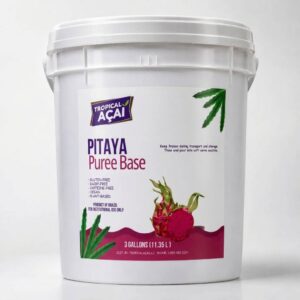
As a result, a fixed 100 g pack makes portion control simple, while whole fruit needs weighing every time. In addition, for wholesale orders, Premium Pitaya Packs, Pitaya Puree Cubes and the Pitaya Puree Base are all sold by Tropical Acai LLC, and the pitaya distributor page explains the range.
A Pitaya Bowl, Counted Gram by Gram
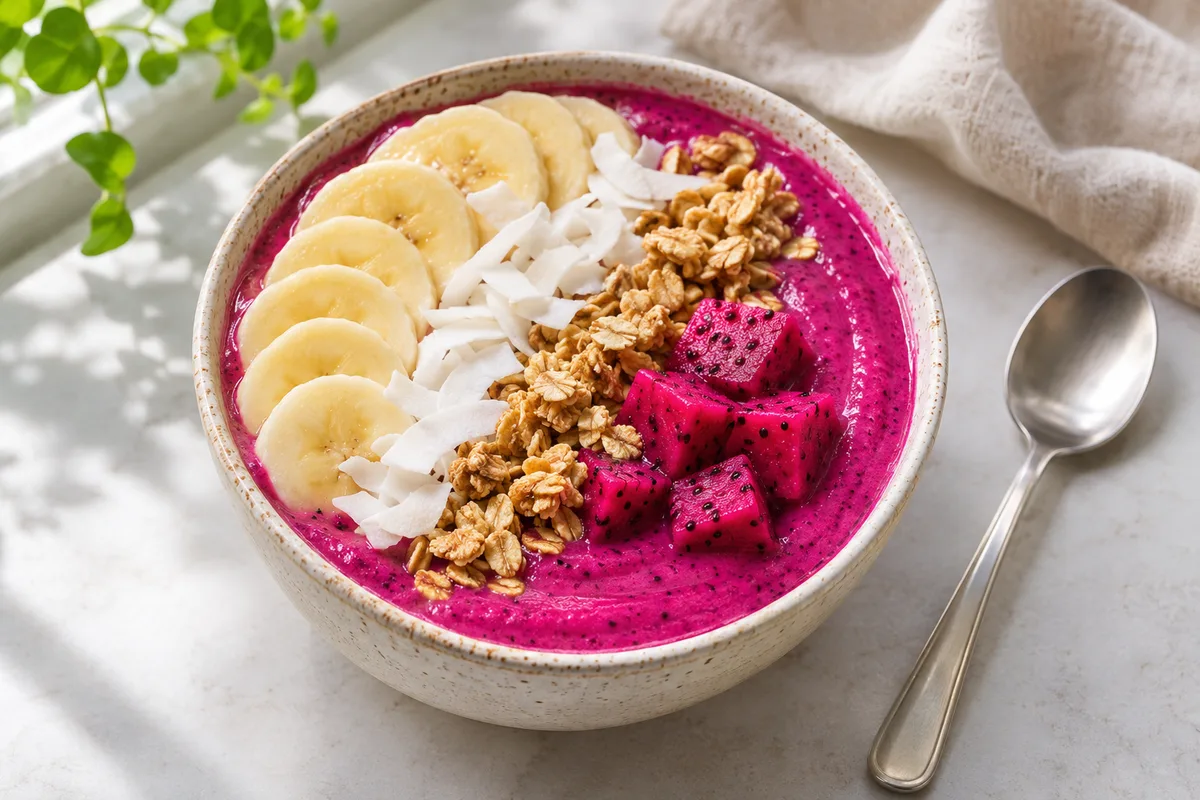
Now, here is one bowl, so you can follow the arithmetic. Specifically, it uses 150 g of the Premium Pitaya Pack and 100 g of banana, and the banana line comes from USDA (89 calories, 1.09 g of protein and 22.84 g of carbohydrate per 100 g).
| Ingredient | Weight | Calories | Protein (g) | Carbohydrate (g) |
|---|---|---|---|---|
| Premium Pitaya Pack | 150 g | 60 | 1.5 | 10.5 |
| Banana, raw | 100 g | 89 | 1.09 | 22.84 |
| Bowl total | 250 g | 149 | 2.6 | 33.3 |
Specifically, the banana adds more calories than the base does. Consequently, the topping decides the total. For other bases and sizes, similarly, the acai bowl portion size guide scales the same method, and the pitaya bowl guide covers building one. In contrast, the pitaya and acai bowl comparison puts two bases side by side.
Pitaya Fruit FAQ
In short, pitaya is the fruit of several cacti of the genus Selenicereus, and it is also called dragon fruit or pitahaya. For more background, see what pitaya is.
In short, yes, the names describe the same fruit. In addition, this comparison explains where each name is used.
For example, USDA lists 68 calories per 100 g for fresh dragon fruit. By contrast, the Premium Pitaya Pack label lists 40 calories per 100 g.
In fact, yes, the small black seeds sit inside the flesh and are eaten with it. For example, the pack label lists pitaya pulp with seeds as its only ingredient.
In addition, Tropical Acai LLC sells pitaya wholesale as packs, puree cubes and a puree base, and each product page lists its label.
Keep Reading
In short, USDA gives the fresh-fruit line, the label gives the pack line, and your scale gives the total. Next, these guides cover other questions, and each one stays on a different angle.