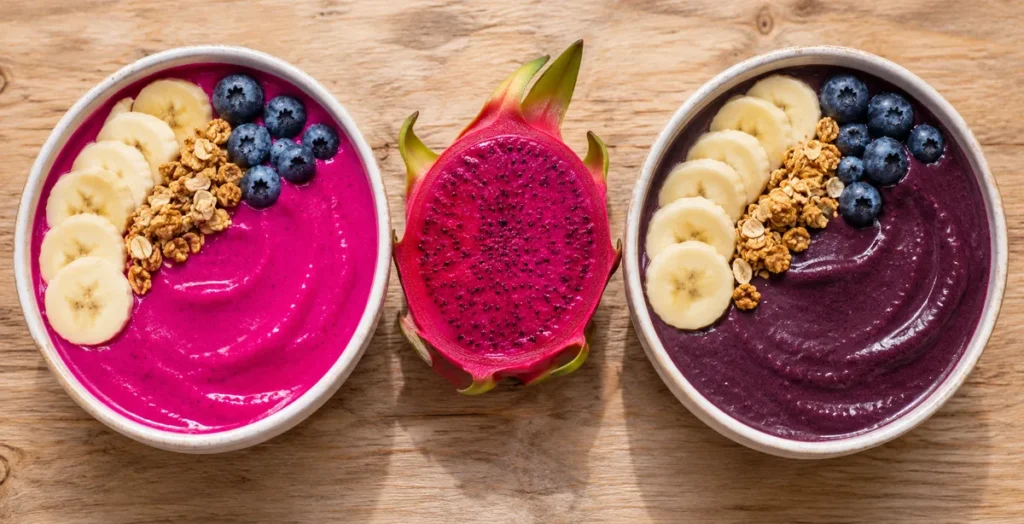
Pitaya or acai? If you compare plain, unsweetened frozen pulp, a pitaya bowl base starts lower in calories: 60 calories per 100 g for pitaya versus 80 for acai, according to the Tropical Acai labels. However, the base is only the start. After all, the toppings and any added sugar decide the final number in the bowl, so this guide compares whole bowls, not just fruit.
Key Takeaways
- Unsweetened pitaya pulp has 60 calories per 100 g, while unsweetened acai pulp has 80 (Tropical Acai labels).
- The sweetened Authentic Mix acai pack has 110 calories and 9 g of added organic sugar per 100 g pack.
- With the same toppings, the two bowls differ by about 40 calories per 200 g base.
- In fact, taste and color differ more than the numbers: acai is earthy and deep purple, dragon fruit is mild and bright pink.
Table of contents
Pitaya vs Acai Bowl Bases per 100 Grams
To begin, look at the frozen pulp that goes into the blender. Below are the label values for the Tropical Acai packs, each 100 g:
| Frozen pulp (100 g pack) | Calories | Added sugar |
|---|---|---|
| Premium Pitaya Pack (red dragon fruit) | 60 | none |
| Organic Pure Acai Pack | 80 | none |
| Authentic Mix Organic Acai Pack | 110 | 9 g organic sugar |
In other words, the gap between the two unsweetened bases is 20 calories per pack. However, the bigger jump comes from sweetening: the Authentic Mix pack adds 30 calories over the pure acai pack, because it contains 9 g of organic sugar.
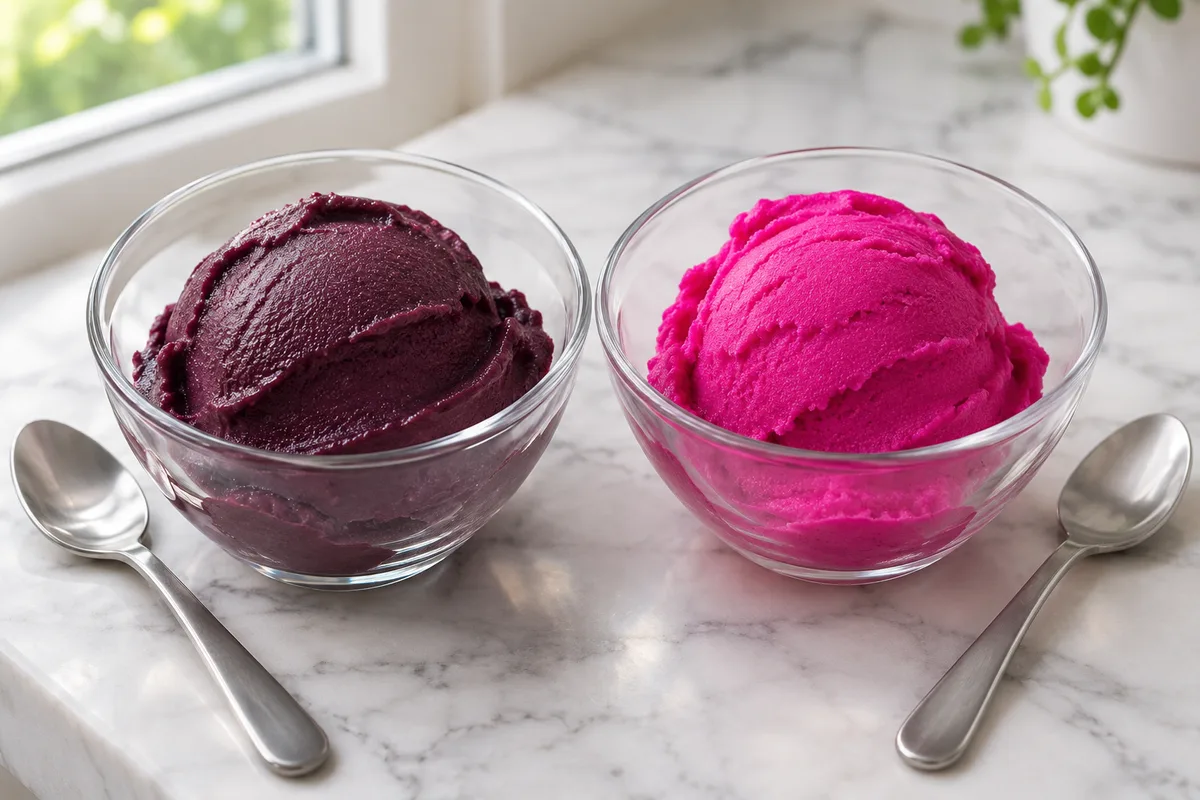
What a Whole Bowl Adds Up To
Most shops use two 100 g packs per bowl. For this reason, the base alone already shows the difference clearly. Also, for a fair comparison, the toppings below stay the same in every bowl: one medium banana (105 calories, USDA) and nothing else.
| Bowl (2 packs + 1 banana) | Base | Banana | Total |
|---|---|---|---|
| Dragon fruit (pitaya) bowl | 120 | 105 | 225 |
| Pure acai bowl | 160 | 105 | 265 |
| Authentic Mix acai bowl | 220 | 105 | 325 |
As a result, the choice of base changes a bowl by 40 to 100 calories. However, toppings such as granola, nut butter or honey add their own calories, so check their labels before you compare bowls on calories alone.
Fresh Pitaya Nutrition from USDA
Next, for the fruit itself, USDA FoodData Central lists these values per 100 g of fresh dragon fruit: 68 calories, 16.2 g carbohydrates, 12 g total sugars, 1.8 g fiber, 0.68 g protein, 0.21 g fat and 19.8 mg vitamin C.
Keep in mind that fresh fruit and frozen pulp are measured differently, which is why the USDA calorie number and the pack label are close but not the same. For acai, the pack label is the most reliable number, because the main USDA databases list acai mostly as juice blends and branded products rather than plain frozen pulp.
Taste, Color and Texture Compared
- Acai: on the one hand, earthy and less sweet than most berries. Its base is also deep purple and creamy.
- Dragon fruit: mild and lightly sweet. In addition, the red-fleshed fruit gives a bright magenta base with tiny black seeds.
- Texture: however, both blend thick when you use frozen packs and very little liquid.
Because dragon fruit tastes mild, it lets the toppings stand out. Acai, on the other hand, carries its own strong flavor, so simple toppings like banana and granola are enough. For more on each fruit, read our dragon fruit guide and our acai guide.
Why Not Serve Both in One Bowl?
Of course, you do not have to choose. A half-and-half bowl shows both colors in one serving. To make one, first blend the two bases separately, and then spoon them into the bowl side by side.
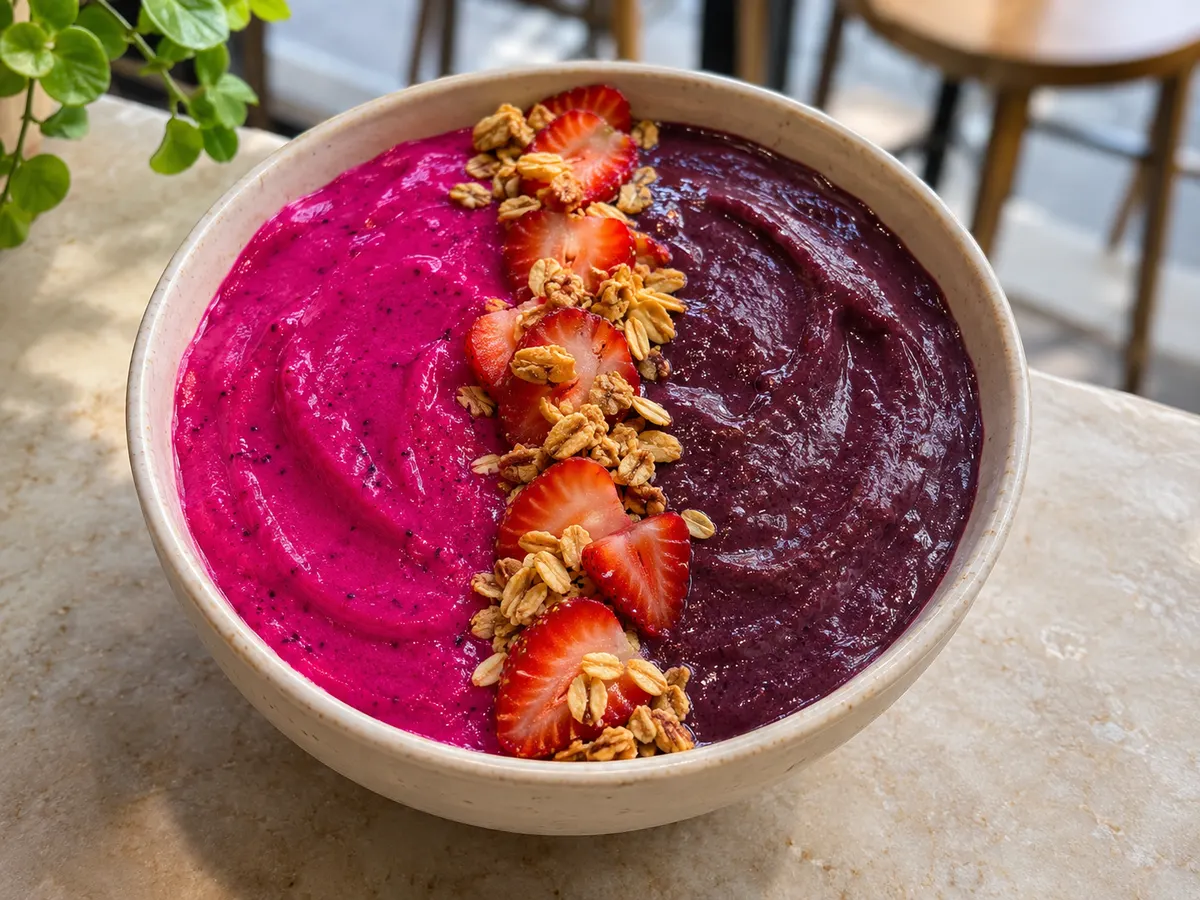
For a full recipe, follow our dragon fruit bowl guide. If you run a café, our comparison of acai and dragon fruit for your business looks at the same question from the menu side.
Pitaya vs Acai FAQ
In short, unsweetened pitaya pulp has fewer: 60 calories per 100 g pack, compared with 80 for unsweetened acai pulp, based on the Tropical Acai labels.
No. The Premium Pitaya Pack and the Organic Pure Acai Pack have no added sugar. By contrast, the Authentic Mix acai pack contains 9 g of organic sugar per 100 g pack.
Yes. For example, banana, granola and fresh berries work with both. However, toppings stand out more on the milder dragon fruit base.
More Pitaya and Acai Reading
Finally, these pages go deeper into each fruit: